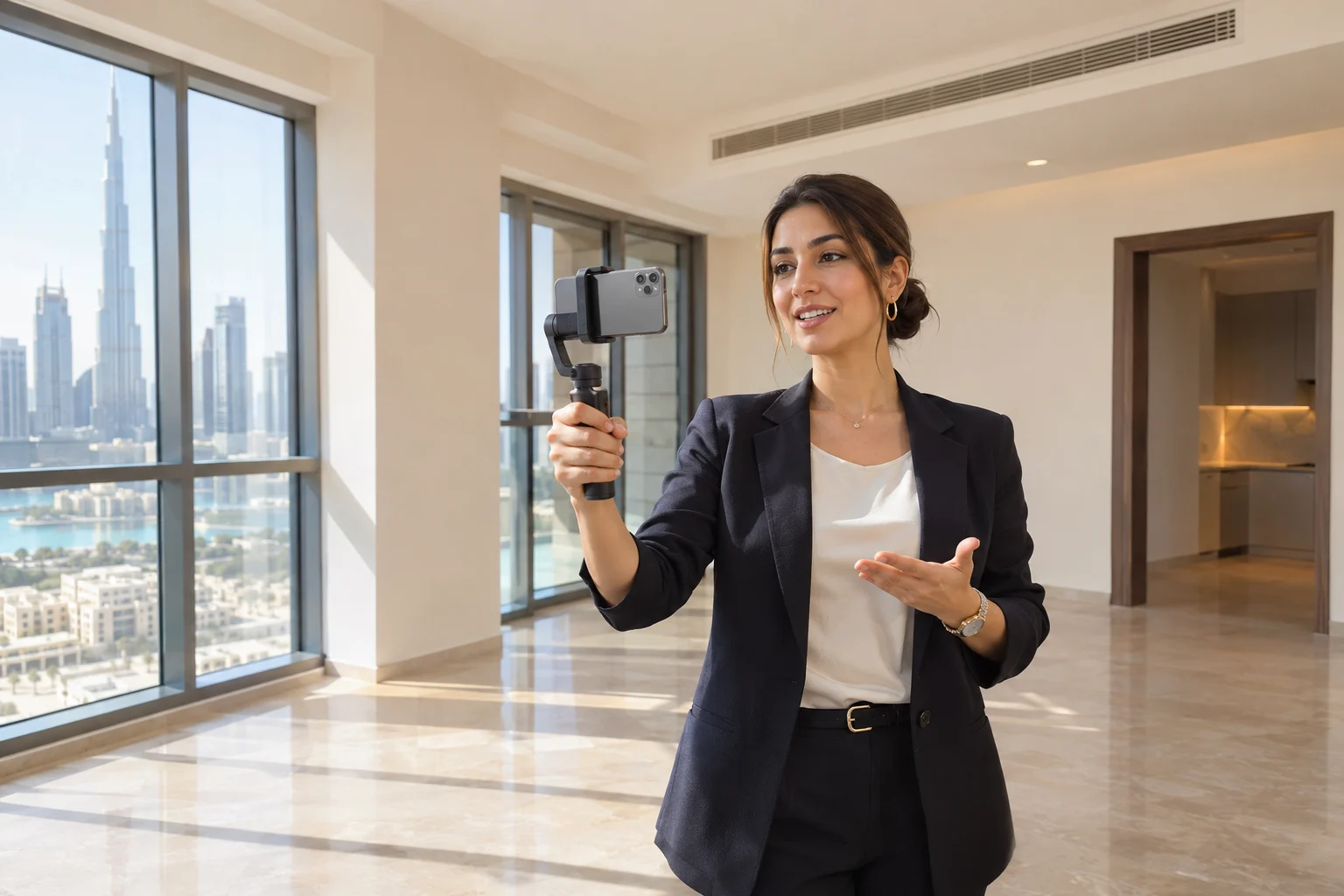
A video call can help you shortlist a Dubai apartment when you are outside the city. It can show the route through the rooms, answer practical questions and reveal details that a listing photograph misses. But a remote viewing works best when everyone understands what it can and cannot confirm.
A remote apartment viewing Dubai renters arrange should be planned around the actual unit and a clear list of questions. It is more useful than a quick camera sweep followed by a request for an immediate decision. The aim is to collect reliable information, identify gaps and decide the next sensible step.
This guide focuses on the viewing process. It does not replace technical inspection, legal review or verification of a transaction. Confirm the relevant people, property details and documents through trusted channels. Do not treat a video call alone as proof of ownership, authority, hidden condition or a guaranteed future service.
Decide what the remote viewing needs to answer
Start with a short household brief. Explain the type of home, broad location preferences and practical requirements. A desk area, furniture fit or separate kitchen is easier to discuss than a request for the perfect apartment. Keep essential needs separate from preferences that you could compromise on.
Write down the questions that cannot be answered from the listing. These might concern the room connection, storage, included items or actual outlook. A focused call helps the advisor show useful details instead of repeating the same attractive angles already visible in the public photographs.
Use the call as part of a wider process
A remote visit is one source of information. Supporting plans, current photographs, documents and an authorised in-person review may answer other questions. Keep those sources distinct so you do not assume a video has confirmed something that was never visible or discussed.
Browse the website's apartments for rent to identify current options, then ask the team to confirm availability. A listing can help begin the conversation, but the viewing and next steps should relate to a specific verified property reference.
Confirm the advisor and appointment through an established channel
Arrange the call using the company's known website contact route or another trusted existing channel. Confirm the advisor's name, property reference, time and call method. Be cautious about unexpected messages that change the destination or introduce new instructions unrelated to the viewing.
Do not share sensitive documents simply to make a video appointment feel official. Ask what information is required for the current step and why. A viewing can often be organised around practical requirements without circulating unnecessary private records among people who do not need them.
Keep time zones and access clear
Write the appointment time with the time zone. Dubai time and the viewer's local time may differ. Confirm that the advisor can access the actual property at the agreed time and whether the home is occupied. Resident privacy and authorised access remain important even when the viewer is far away.
Ask how changes will be communicated if access or connection fails. A clear backup plan might involve a revised appointment or an agreed recording made with the appropriate permissions. Do not assume that every home can be filmed at any time simply because the call is remote.
Establish which unit is being shown
At the start, confirm the listing reference and whether the call shows the exact apartment or a representative example. A similar layout can help explain a development, but it should not be presented as proof of the specific unit's view, condition or included furnishings.
Keep screenshots and notes attached to the correct reference, with permission where needed. If several units are discussed, pause and label them separately. Mixing the best view from one apartment with the kitchen of another can create an attractive imaginary home that nobody is actually offering.
Ask for a clear room sequence
Agree a simple order: entrance, living space, kitchen, bedrooms, bathrooms and any other relevant authorised area. A consistent route helps you understand connections between rooms. Short close-ups without a wider context can make a property difficult to understand even when the images themselves are clear.
Ask the advisor to pause where a detail matters. The aim is not to direct an improvised technical inspection. It is to make the viewing understandable and identify questions that need another source of evidence or a qualified review.
Review the layout before the decoration
Ask for wider views that show the shape of each room and how doors connect. Notice corridors, corners and fixed features. A beautiful finish can make a strong impression, but the household still needs practical space for sleeping, working, eating and moving around.
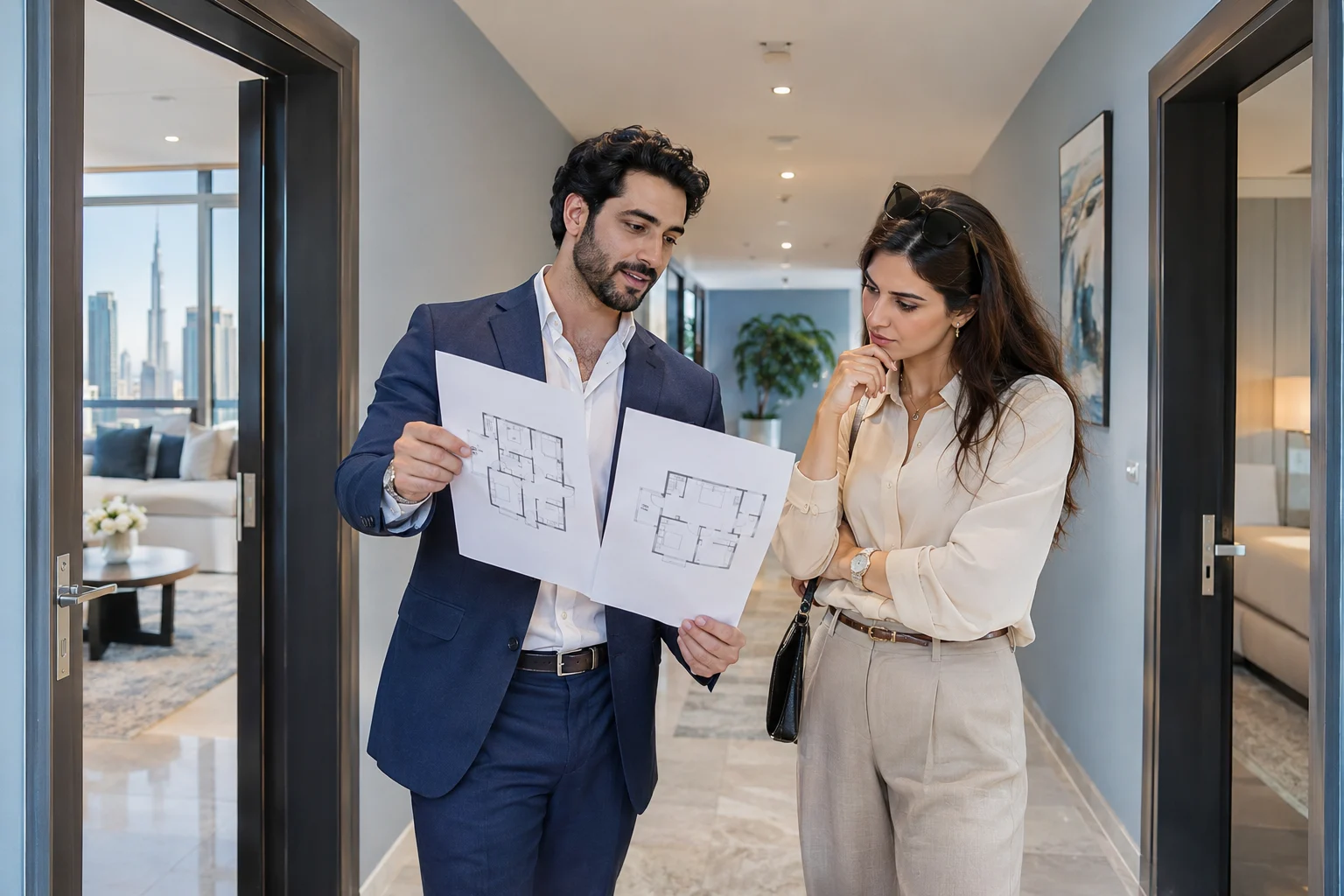
Use a plan where available, with its source and limits clear. Do not assume that a plan for a similar unit matches exactly. If a dimension matters, ask for reliable supporting information or appropriate measurement rather than estimating it from the camera angle.
Use your furniture dimensions as prompts
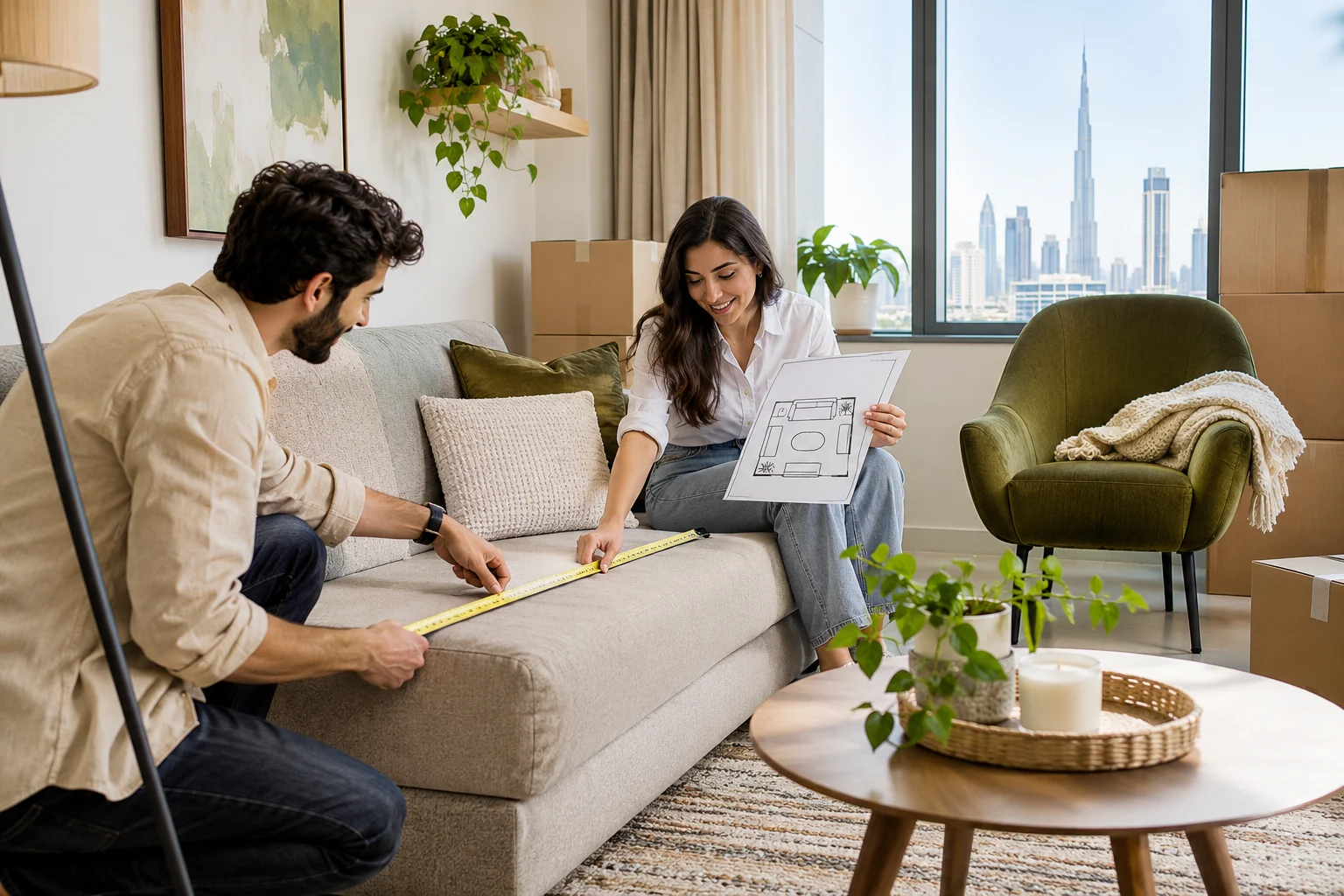
Keep a short list of key furniture sizes beside you. Ask about relevant wall lengths and clear routes where practical. A sofa may appear small through a wide lens, while a room can seem larger when the camera is held near a corner. Treat visual impressions as prompts for checking, not exact measurements.
The furniture measurement guide explains related fit questions. A remote call can identify which dimensions need confirmation, while a reliable measurement process answers the precise question before furniture decisions are made.
Ask what the camera cannot represent well
A video depends on lighting, lens, connection quality and the device used. Colour, brightness, room depth and fine surface details may not appear exactly as they do in person. A brief pause or change in exposure can alter the impression without anyone intending to mislead.
Ask the advisor to explain whether lights are on and what conditions apply during the call. Record the appointment time. Do not treat the image as proof of daylight throughout the day or assume a bright screen means the room will feel equally bright under every condition.
Request useful supporting images
Where appropriate and permitted, ask for current still photographs that clarify a particular question. A wider shot can show location, while a closer image can record a visible mark. Keep the request focused instead of collecting a large gallery that still leaves the central issue unanswered.
For light and sightlines, the natural light and privacy guide provides useful context. A video should not include unnecessary images of neighbouring interiors or people. Privacy limits apply to remote viewers as well as visitors standing in the room.
Treat sound and connection quality cautiously
A video call can suppress or exaggerate sound. Microphones, background filtering and signal changes can affect what reaches the viewer. You may ask about an observed sound, but silence on the call is not evidence that the apartment or surroundings are always quiet.
Likewise, a successful call does not guarantee the connection service a future resident will receive. Confirm current service options with the relevant provider where they matter to your routine. Do not rely on one advisor's device or temporary connection as a promise about the home.
Keep observations separate from technical conclusions
If a sound, visible mark or other concern arises, record it and ask for the appropriate follow-up. Do not diagnose a fault through the screen or accept a casual explanation as a qualified finding. Some questions need an authorised in-person review or specialist assessment.
The apartment noise viewing guide can help you frame questions, but a remote call has additional limits. Be explicit about what you did not experience directly and what still needs another source of evidence.
Review included items carefully
Ask which furniture, appliances and coverings belong to the offered arrangement. Visible items may be staging or a current occupant's belongings. A furnished label does not establish an identical package across units, and an unfurnished home can still contain temporary items during a viewing.
Request a clear included-item record through the appropriate process. Note the source and date. If something changes after the call, ask for an update rather than relying on a screenshot of an item that is no longer part of the proposal.
Use a simple room-by-room inventory question list
For each room, ask what stays, what is being removed and what remains unconfirmed. Keep condition observations separate from inclusion. An item may be included but need further review, or it may look new on screen while belonging to someone else.
The website's furnished property inventory guide develops this topic. Use it to organise a practical record without treating the video alone as proof of every item's condition or contractual status.
Ask about the route outside the apartment
A remote room tour may omit the entrance, lift route and relevant parking or drop-off arrangement. Ask which authorised areas can be shown and which details need confirmation from another source. A building name does not explain every practical step of arriving home.
Do not request filming that exposes other residents or restricted security arrangements. Keep questions about ordinary access focused on the process relevant to the unit. If a building team needs to confirm a point, mark it as pending rather than asking the advisor to improvise an answer.
Research the location through several sources
Use a current map, area information and your own routine to identify questions. Check the actual entrance and relevant route, not only the general community name. Travel experiences vary, so avoid treating one online journey estimate as a permanent guarantee.
The Dubai communities page, Warsan 4 guide and International City page provide starting context. The specific building and unit still require their own confirmation.
Record visible concerns and proposed work
Ask the advisor to identify relevant known work or visible findings within the viewing's limits. If a repair is proposed, record its scope, responsible person and current status. Do not compare a future improvement as if it has already happened.
A remote image may not show every surface detail. If condition is central to your decision, request the appropriate authorised inspection or review. Keep the purpose clear: a routine viewing, a condition record and a specialist assessment are different activities and should not be presented as the same service.
Confirm the evidence needed before the next step
For each important concern, decide what would answer it. A clearer photo may resolve a question about layout, while a technical symptom may need qualified assessment. A question about included items may need documentation. Matching the evidence to the question is more effective than asking for another general video.
Do not allow an unanswered point to disappear because the call felt friendly or the property looked attractive. Preserve it in the follow-up list. A useful remote process can end with uncertainty, provided the next action and responsible person are clear.
Use a follow-up summary after the call
Write a short summary with the property reference, viewing date, observed points and outstanding questions. Separate preferences from facts. For example, wanting a closed kitchen is a preference; seeing an open connection is an observation; asking whether an item remains is a confirmation task.
Send focused questions through the established channel. Avoid a long unstructured message that mixes several properties and decisions. The advisor should be able to identify which detail needs an answer and where another team or document is required.
Keep recordings and screenshots proportionate
Ask permission before recording where required and follow the agreed arrangements. Store any permitted material securely and use it for the stated purpose. Do not circulate images of residents, private belongings or neighbouring interiors simply because they appeared briefly during the call.
A recording is a reference for what was shown. It is not a replacement for current verification or the relevant documents. If the property's condition or inclusions change, request updated information rather than treating an earlier video as permanently authoritative.
Know when an in-person review would add value
A trusted authorised representative or appropriate professional may be able to review matters the call cannot resolve. Be specific about the purpose and authority. An ordinary visitor should not be asked to give technical or legal assurances beyond their role.
If you can visit later, use the remote call to create a focused shortlist rather than pretending the remaining checks are unnecessary. The aim is a sensible decision with clear evidence, not simply the fastest route from a listing to a commitment.
Avoid acting on pressure alone
This guide does not prescribe transaction steps, charges or documents. Those depend on the actual arrangement and current requirements. Ask the responsible professionals to explain the process, and obtain qualified advice where needed. Do not send money or private records based only on an unverified call or unexpected message.
For an organised appointment, contact Friends Guide Real Estate. Share the listing reference, time zone and practical questions. Ask the team to confirm the call and authorised access through the normal company route before making plans around it.
Example: shortlisting from another country
Imagine a renter comparing two one-bedroom apartments from overseas. The first video makes one living room look larger, but no reliable dimensions are available. The second has a clear included-item list but needs a better view of the kitchen route. The useful next step is different for each home.
The renter requests appropriate measurements for the first and a focused follow-up view for the second. They keep sound, daylight and technical condition marked as limited observations. The remote process has done its job by narrowing questions, rather than claiming to replace every later check.
Prepare a short call plan that is easy to follow
A remote appointment can feel rushed when several people ask questions at once. Choose one person to guide the conversation and another to take notes if that helps. Send a short list of priorities through the established contact channel before the appointment. Explain which rooms matter most and whether you need particular dimensions confirmed later.
Start with a simple route: entrance, main living space, kitchen, bedrooms and any relevant outdoor area. Ask for a steady view of the connection between rooms so the layout makes sense. If the connection freezes, stop and clarify where the tour is restarting. A repeated room view is better than quietly losing track of the apartment.
Decide how to handle a missed detail
Write down a question as soon as it arises, but avoid interrupting every few seconds. You can review the list at the end and ask the advisor to return to a specific area when appropriate. A request such as Please show the space beside the wardrobe again is easier to answer than Can you show everything once more.
If a detail cannot be shown clearly, ask what a useful alternative would be. A permitted still photograph may explain a cupboard layout. A reliable plan may help with room connections. A measurement taken through the appropriate process may answer a furniture question. None of these should be treated as proof of hidden condition or a substitute for technical review.
Write a same-day summary while the tour is fresh
After the call, separate your notes into observed details, information reported by the advisor and unanswered questions. For example, you may have observed the layout, been told that an appliance is included and still need confirmation of its exact inventory description. Those are three different levels of information and should remain different in your record.
Share only the summary that is needed with the people helping you decide. Do not forward private access instructions, personal identification or recordings without a clear reason and the appropriate permission. A household comparison can usually work with the property reference, general layout notes and the questions that still need answers.
End the remote stage with a practical decision: arrange an in-person visit, request a specific follow-up or remove the unit from the shortlist. Avoid treating a smooth video call as a reason to rush the next stage. The useful result is a clearer understanding of what you know, what you do not know and which checks are still needed before making any commitment.
10 frequently asked questions
1. Can a remote apartment viewing help me choose a Dubai home?
It can help you shortlist and understand layout, included items and practical questions. Treat it as one source of information with clear limits. It does not prove authority, hidden condition or every future service, so relevant verification and appropriate reviews remain important before a commitment.
2. How do I confirm the correct unit is being shown?
Ask for the listing reference and confirm whether the call shows the actual apartment or a representative example. Keep notes and permitted images attached to that reference. If several homes are discussed, label them separately so their views, furnishings and layouts do not become mixed together.
3. Can I measure room size from the video?
Do not rely on camera impressions for exact dimensions. Lens and position can change apparent depth. Use the call to identify which measurements matter, then request reliable plans or appropriate measurement. Keep any informal estimate clearly labelled rather than treating it as a verified survey.
4. Does a quiet video mean the home is quiet?
No. Microphones and call software can filter sound, and the appointment captures only a short period. Ask focused questions and consider appropriate in-person observation where needed. A remote call should not be used to claim technical compliance or guarantee conditions throughout the day.
5. Are all furnishings shown on the call included?
Not necessarily. Ask what belongs to the offered arrangement, staging or a current occupant. Request a clear included-item record and an update if anything changes. Keep inclusion separate from condition, because seeing an item on screen does not establish every detail about it.
6. Should I record the viewing?
Use recording only with the appropriate permission and agreed purpose. Keep material secure and avoid unnecessary private images. A recording can support your notes, but it does not replace current confirmation or relevant documents if condition, access or included items change after the appointment.
7. What if the connection is poor?
Pause and agree a practical next step rather than pretending the missing details were checked. A revised call or permitted supporting images may help. Keep the property reference clear and record which questions remain unresolved so the viewing is not treated as complete simply because a call occurred.
8. Can a representative view the home for me?
An appropriately authorised person may be able to review agreed practical points, subject to access arrangements. Be clear about their role and limits. An ordinary viewing does not make them a technical inspector or legal advisor, and sensitive information should be shared only as needed.
9. What should I ask after a remote viewing?
Send a concise list of unanswered questions tied to the correct unit. Ask for evidence suited to each point, such as current inclusions, reliable dimensions or appropriate assessment. Separate confirmed information from preferences and unresolved issues rather than relying on a general assurance that everything is fine.
10. Can Friends Guide arrange a remote viewing?
Ask the team about the current listing, your time zone and preferred appointment. The call depends on availability and authorised property access. Use the company's established contact route, share practical requirements and wait for confirmation before relying on the proposed time or viewing arrangement.
Dubai Property Viewing Checklist
Continue your research with current Friends Guide Real Estate listings and related property pages: Properties for sale in Dubai · Properties for rent in Dubai · Dubai real estate team.