Listen for the life you will actually live
A beautiful living room can win your attention in seconds. Noise takes longer to understand. You may only notice the lift door after standing quietly, or hear a busy road when the agent stops speaking. Checking apartment noise before renting in Dubai helps you judge whether an attractive home fits your normal day. The aim is to gather useful observations, not to prove that any apartment will always be silent.
Start with your routine. Someone who works away from home all day may care most about evening rest. Someone who takes online calls may need a quieter desk position during working hours. Families may have several different sleep and study times. Write those needs before the viewing so you do not judge the whole home from one short moment in the living room.
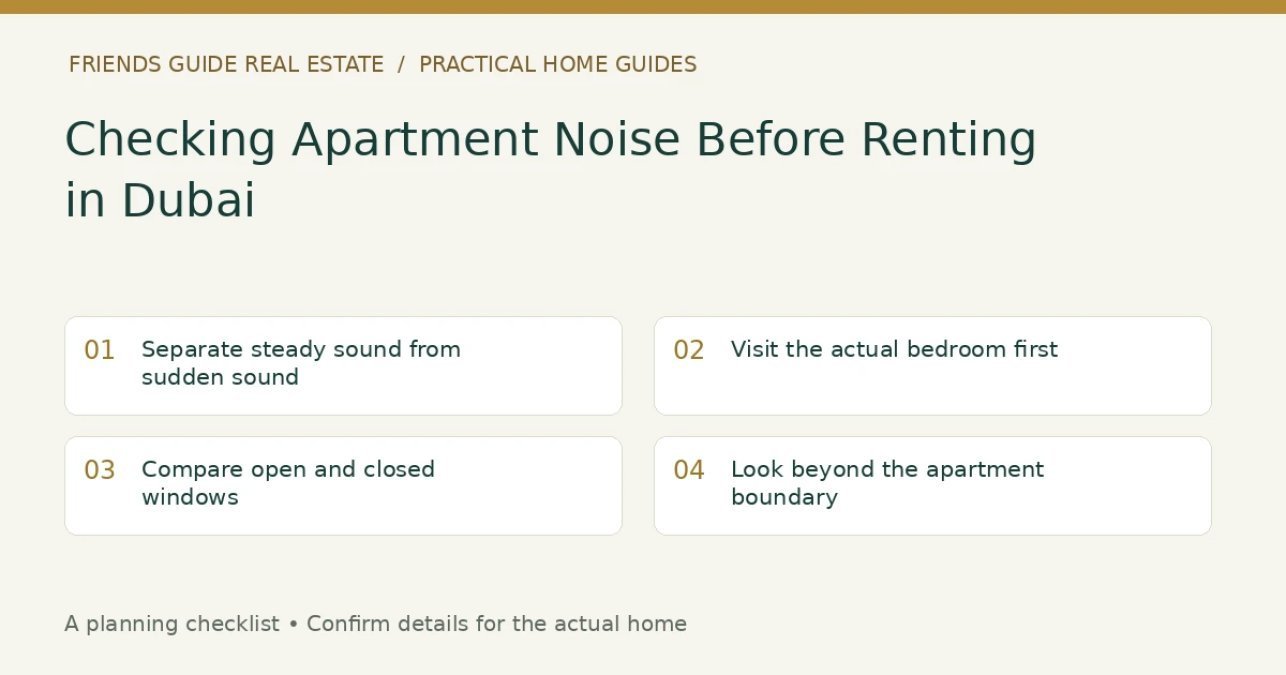
Separate steady sound from sudden sound
A steady background sound may be traffic, ventilation or distant activity. A sudden sound might be a closing door, a trolley crossing a joint or a vehicle horn. Both can matter, but they affect people differently. During the viewing, note whether the sound continues, arrives in bursts or happened only once. Describe it in plain words rather than guessing at a technical cause.
For example, “road sound was audible with the bedroom window closed” is useful. “The building has bad sound insulation” is a conclusion you may not be qualified to make. Keep observation and explanation separate. If a recurring sound concerns you, ask the agent or building contact what it may be and whether there is reliable information about it. A clear question is more useful than a broad complaint.
Visit the actual bedroom first
Stand where the bed is likely to sit. Stop conversation for a short period and listen. The bedroom may face a different direction from the living room, so do not assume both spaces sound alike. Notice the position of the door, windows, adjacent corridors and any obvious nearby equipment. If furniture is present, ask permission before moving anything.
Try the room with the door in its normal sleeping position. If another household member sleeps while you prepare breakfast or leave for work, think about sound from inside the apartment too. A quiet street cannot solve a bedroom directly beside the main entrance if the household has very different schedules. Match the room arrangement to the way people will use it rather than treating noise as only an outside problem.
Compare open and closed windows
Ask permission to operate the windows in the normal way. Listen with them open and then closed, without forcing any handle or touching seals unnecessarily. Check that the window closes properly. Note what changes and what remains audible. This is a simple comparison, not a formal acoustic test, and it cannot predict every weather condition or future source of noise.
If a window seems loose or damaged, describe the visible issue and ask whether it will be assessed before handover. Do not accept a promise of perfect soundproofing without a specific basis. A different seal, curtain or pane is not automatically a guaranteed fix. Ask the responsible person what work is proposed and what result can reasonably be checked. If quiet is essential, consider professional advice before committing.
Look beyond the apartment boundary
From permitted viewing areas, observe what faces the windows. You may see a road, loading area, parking entrance, landscaped space, neighbouring building or active work site. Record the direction and approximate relationship rather than relying on a listing description such as “community view”. A pleasant view and a quiet environment are separate qualities.
Consider how the same place might be used at another time. A parking entrance may be busier when residents return. A service area may be used at particular hours. Ask about the known routine and seek a second visit if it matters to you. Avoid photographing people, private balconies or security arrangements. You are checking the surroundings of the home, not collecting information about the residents.
Use a second visit for a real question
If the first viewing leaves uncertainty, choose a second time that answers a specific question. Perhaps you want to hear the bedroom in the evening or the desk area during normal working hours. Tell the agent why that time matters. Access still depends on permission and availability, especially if the home is occupied.
A second visit is most useful when you repeat the same simple checks. Stand in the same rooms, close the same windows and note the time. This makes the comparison clearer. Do not expect two visits to guarantee future quiet. Traffic, neighbours, maintenance and surrounding development can change. The visits help you decide with better evidence, while leaving room for the uncertainty that comes with any shared building.
Pay attention to corridors and entrance doors
Listen near the apartment entrance without blocking the corridor. Notice whether lift arrivals, door closings or people passing are audible inside. A unit near a lift lobby may feel convenient while also placing everyday movement close to the entrance. A unit further away may have a longer walk. The right balance depends on your mobility, luggage and quiet requirements.
Check the bedroom’s distance from the main door on your layout notes. If household members leave at different times, keys, shoes and conversation near the entrance can be as important as shared-corridor sound. You cannot judge other residents from a brief visit. Focus on the physical route and what you can actually hear. Ask the building contact how concerns are normally reported if you need to understand the process.
Ask about equipment without making a diagnosis
You may notice a hum, vibration or cycling sound. It could come from equipment inside the apartment or somewhere else. Record where you hear it, whether it changes between rooms and whether it continues during the visit. Ask the person showing the home to help identify the responsible contact. Do not open cupboards containing unfamiliar equipment or enter restricted service areas.
If the sound is significant to your decision, request clarification before committing. A statement that “maintenance will handle it” does not tell you what has been checked. Ask whether the issue has been assessed, what work is proposed and when you can revisit. Keep your notes factual. Technical performance, building systems and any proposed modification should be assessed by an appropriately qualified provider.
Test the desk position you expect to use
Choose a likely place for a desk and imagine a normal call. Is it close to a window facing a busy area? Does the room share an opening with the kitchen? Will another person watch television nearby? Noise from your own home can affect work even when the building itself is calm. A spare room or a different desk orientation may help you organise the household.
Do not record other people’s conversations or make a test call that captures them without consent. Simply listen, discuss the routine and ask about the available rooms. Check lighting and power access at the same time. A desk that is quiet but blocks a doorway is not a useful solution. Your aim is a workable daily setup with space to sit, move and take calls comfortably.
Think carefully about children and shared routines
A family home may need a quiet study corner, an early bedtime and space for adults to talk later. Draw a simple plan showing those uses. If the only desk fits beside the television, a larger total area may not provide the separation you expect. If two bedrooms sit on different sides of the apartment, they may also have different sound conditions.
Let family members explain what they need in simple terms. One person may be disturbed by sudden sounds while another notices a steady hum. Avoid dismissing a concern because you do not hear it in the same way. If possible, have the people who will use the rooms attend a permitted viewing. A short shared discussion now can prevent a disagreement after the lease is signed.
Do not use a phone reading as a guarantee
A phone app may display a number, but that does not make the viewing a professional acoustic survey. Different devices, positions and settings can give different readings. A brief measurement also cannot show every event that may happen later. Use your own observations and, when necessary, advice from a qualified specialist rather than treating an app result as proof.
If you choose to make personal notes with a device, record the context: room, time, window position and what was happening. Avoid recording conversations or sharing recordings that include other people. Do not publish technical ratings about a building based on a casual test. The practical question is whether the observed conditions fit your needs and what remains uncertain, not whether one screen shows a reassuring number.
Make your questions specific and answerable
Instead of asking “Is it quiet?”, ask “Can we return during the evening to listen in this bedroom?” Instead of “Will the noise stop?”, ask “Has this sound been assessed, and who can explain the next step?” Specific questions lead to clearer answers. They also help the agent understand whether another available unit might suit you better.
Keep promises separate from observations on your comparison sheet. A confirmed repair appointment belongs in one column. An explanation that still needs checking belongs in another. Do not assume a proposed curtain, rug or furnishing change will solve sound coming through a structure. If the answer affects your decision, get it clarified before paying or signing. The correct route for a contract concern depends on your agreement and the relevant professional advice.
Compare units within the same building
Two apartments in one building can have different orientations, floor plans and positions relative to activity. The same community name does not make them interchangeable. If several homes are available, compare the exact unit you may rent. Ask whether its windows face the same side as the show apartment and whether the bedroom layout is identical.
Keep the comparison balanced. A quieter-facing unit may receive different daylight or have another view. A home further from shared facilities may involve more walking. Record the benefits and compromises together. Avoid choosing solely from a “high floor” or “corner unit” label, because those descriptions do not guarantee the conditions you need. The room, outlook, nearby activity and your routine should be considered as one decision.
Keep a simple noise observation sheet
For each home, write the viewing date, arrival time and rooms checked. Add window position, any sound you noticed and its apparent direction. Use short descriptions such as “occasional corridor door sound” or “steady outdoor traffic audible near desk”. Add a question mark when the source is unknown. This keeps your notes useful without pretending to be a technical report.
Give each important room its own line. You may find the living room acceptable and the bedroom uncertain. Add the next action beside any concern: second visit, clarification or another unit to compare. Make notes immediately after leaving rather than after several more viewings. With permission, a room photo can help you remember the layout, but do not include people or personal belongings unnecessarily.
Use a realistic comparison example
Imagine two fictional apartments with the same asking rent. In the first, the living room feels calm at lunchtime, but the bedroom faces a busy vehicle entrance. In the second, the view is less open, yet the bedroom sits away from that entrance. Neither description proves which home is better. Your work hours, sleep schedule and tolerance for the sound matter.
The next step is to test the uncertainty. Arrange an allowed visit at a relevant time, listen in both bedrooms and ask about known activity. Compare the result alongside travel, layout and total agreed costs. Do not turn one negative into an automatic rejection or one quiet moment into a guarantee. A useful decision explains what you observed, what trade-off you accept and what still needs confirmation.
Plan reasonable household adjustments
Some sound comes from how a home is used. A television against a shared bedroom wall, shoes dropped beside a sleeping room or calls taken in an open kitchen can disturb your own household. Discuss furniture positions and routines before deciding whether the apartment works. Small changes may improve everyday comfort when everyone understands the reason.
Ask permission before making physical changes to the property. Do not attach materials, alter doors or modify equipment on the assumption that it is allowed or effective. Keep exits, vents and normal access clear. If you need specialist work, obtain the necessary approval and qualified advice. Household planning can improve use of a space, but it should not be presented as a guaranteed cure for an external or structural sound problem.
Recognise when you need more information
Pause if quiet is a firm requirement and a major source remains unexplained. You may need another visit, a different unit or an independent assessment. A deadline from a listing should not force you to pretend that an unanswered question has been resolved. Tell the agent which condition matters and what information would let you decide.
Avoid relying on statements about neighbours that cannot be verified and may intrude on their privacy. You are choosing a home, not approving the people who already live nearby. Focus on observed sound, layout and the building’s normal process for concerns. If a dispute or a contractual issue arises, seek appropriate advice rather than using a general viewing checklist as a legal answer.
Leave with a decision, a question or a reason to compare
After the visit, put the property into one of three practical groups. The first is suitable based on what you observed, with ordinary uncertainty acknowledged. The second needs one clearly named check, such as an evening bedroom visit. The third does not fit your needs for a reason you can explain. This prevents you from collecting more and more listings without learning what matters.
If you request another option, give the agent a useful brief. Explain which room, sound source or time created the concern. Avoid broad statements about an entire community based on one apartment. A different orientation or floor plan may change the experience. Keep your decision tied to the evidence you gathered and the routine you described at the start. You are looking for a manageable home, and a clear account of your priorities gives the search a better direction.
Take the next step with clearer requirements
When browsing Dubai properties for rent, tell the agent your important listening times and the rooms you need to protect. “I take client calls from home between morning and afternoon” gives a clearer brief than “I want somewhere nice”. Combine noise needs with your budget range, preferred areas and moving window.
Explore apartment listings and the property journal for related planning questions. To arrange a viewing, contact Friends Guide Real Estate. Ask to see the actual available home and confirm access for any repeat visit. A thoughtful viewing cannot promise silence, but it can help you choose with a much clearer understanding of daily life.
Dubai Property Viewing Checklist
Continue your research with current Friends Guide Real Estate listings and related property pages: Properties for rent in Dubai · Apartments for rent in Dubai · Speak with our Dubai real estate team.