Decide what bright and private mean to you
People use these words differently. One person wants a sunlit breakfast area, another prefers gentle light for a screen, and another cares most about closing a bedroom curtain without making the room feel dark. Write down the activities and rooms that matter before comparing apartments. This turns an attractive impression into an answerable question.
Think about how you use the home during daylight and after dark. A daytime living room and a nighttime bedroom have different privacy needs. Include the views and light you enjoy, but identify any condition you would find difficult to manage. The best match balances your own routine rather than trying to maximise every feature at once.
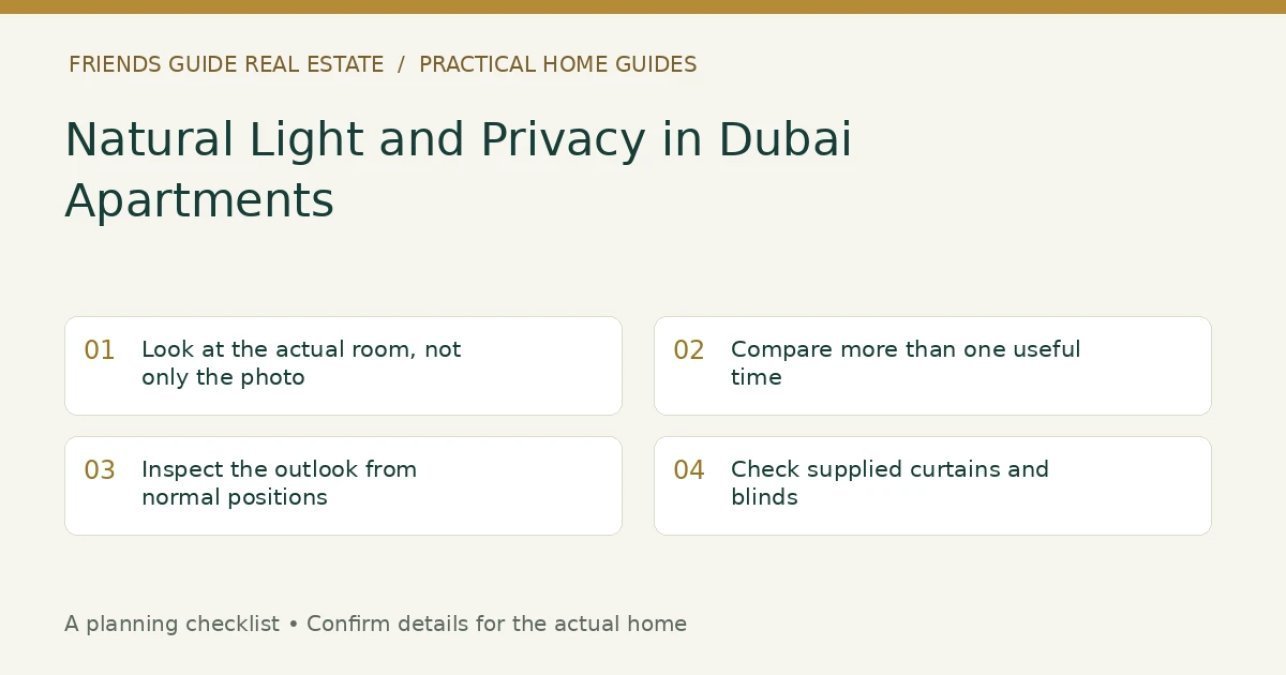
Look at the actual room, not only the photo
Listing photos are useful for finding possibilities, but they capture one angle and one moment. Open curtains, camera settings and interior lighting can change the impression of a room. During a viewing, look at the actual window positions, the room shape and how light reaches the places you would use.
Do not assume a show apartment or another floor has the same outlook as the available unit. Confirm which home you are viewing and compare its actual features. Take permitted notes and photos without including neighbours or occupants’ private belongings. The purpose is to remember the room you might live in, with its real conditions and uncertainties.
Compare more than one useful time
A room may feel different in the morning and later in the day. If a specific daylight period matters, ask about a permitted visit that can help you observe it. Explain whether you are checking a work corner, breakfast area or bedroom. Access depends on permission and availability, especially in an occupied home.
Record the date, time and conditions of each observation rather than treating a second visit as a guarantee for every season. Weather and surroundings can affect light. Use the visits to reduce an important uncertainty and compare the same room positions. You do not need to chase perfect conditions; you need enough information to understand the home’s fit for your routine.
Inspect the outlook from normal positions
Stand or sit where the bed, sofa or desk would normally be. Notice what you can see through the windows from that position. A view described as open may include a neighbouring balcony or another building in part of the outlook. Check the room you care about rather than assuming every window shares the same view.
Stay within permitted areas and do not lean outside, photograph private spaces or inspect other residents. You are considering the relationship between your own windows and the surroundings. If the outlook leaves you uncomfortable, note the specific room and position. Compare another arrangement or unit rather than relying on an unverified promise that the view will never change.
Check supplied curtains and blinds
Ask which window coverings are included and use normal gentle operation if permission is given. Notice whether they cover the intended area, allow flexible adjustment and interfere with doors or furniture. A covering seen in a furnished photo may not be part of the agreed inventory for the actual home.
If you plan a replacement, measure correctly and confirm permission, fitting method and supplier requirements. Do not assume a product name guarantees the result you want. Consider how you would use it at different times of day. A practical solution should support the room’s normal access and operation rather than solving one issue by creating another.
Separate a pleasant view from practical privacy
An open skyline view can be appealing, but privacy depends on the particular windows, nearby spaces and your use of the room. A lower or inward-facing home may provide different compromises. Avoid treating floor level or a marketing label as a complete answer. Look at the actual room and the normal places people occupy.
Discuss the trade-off with your household. One person may value the outlook while another prefers more control over visibility. Suitable coverings may help, but confirm the actual arrangement before relying on it. Your choice should explain what you gain, what you give up and which practical adjustments are available with the relevant permission.
Plan screens and mirrors with daylight
At a proposed desk or television position, look for reflections and strong contrasts. A bright room can be pleasant while still making one screen position awkward. Mirrors and glossy surfaces may change how the light feels. Draw a few furniture arrangements rather than assuming the wall used in a listing photo is the only option.
Check that an alternative position does not block doors, cupboards or normal walking routes. If you need task lighting or different coverings, include the cost and permission questions in the plan. Do not judge the whole home from one screen angle. A small verified layout change may help, while an unsuitable room arrangement may require a different property.
Consider bedrooms during daytime and evening
A bedroom serves different routines: getting dressed, reading, resting or sleeping after a shift. Check the existing light and privacy controls against those uses. Ask whether another person’s schedule affects how the room will be used. A room chosen only for its daytime appearance may leave an important evening question unanswered.
You can discuss a permitted visit at another relevant time, but do not assume that it is always possible. Keep observations separate from future expectations. Confirm any proposed changes to coverings or fittings before relying on them. The aim is an arrangement that supports your household with realistic adjustments, not a promise that every bedroom will provide the same experience.
Look at furniture positions near windows
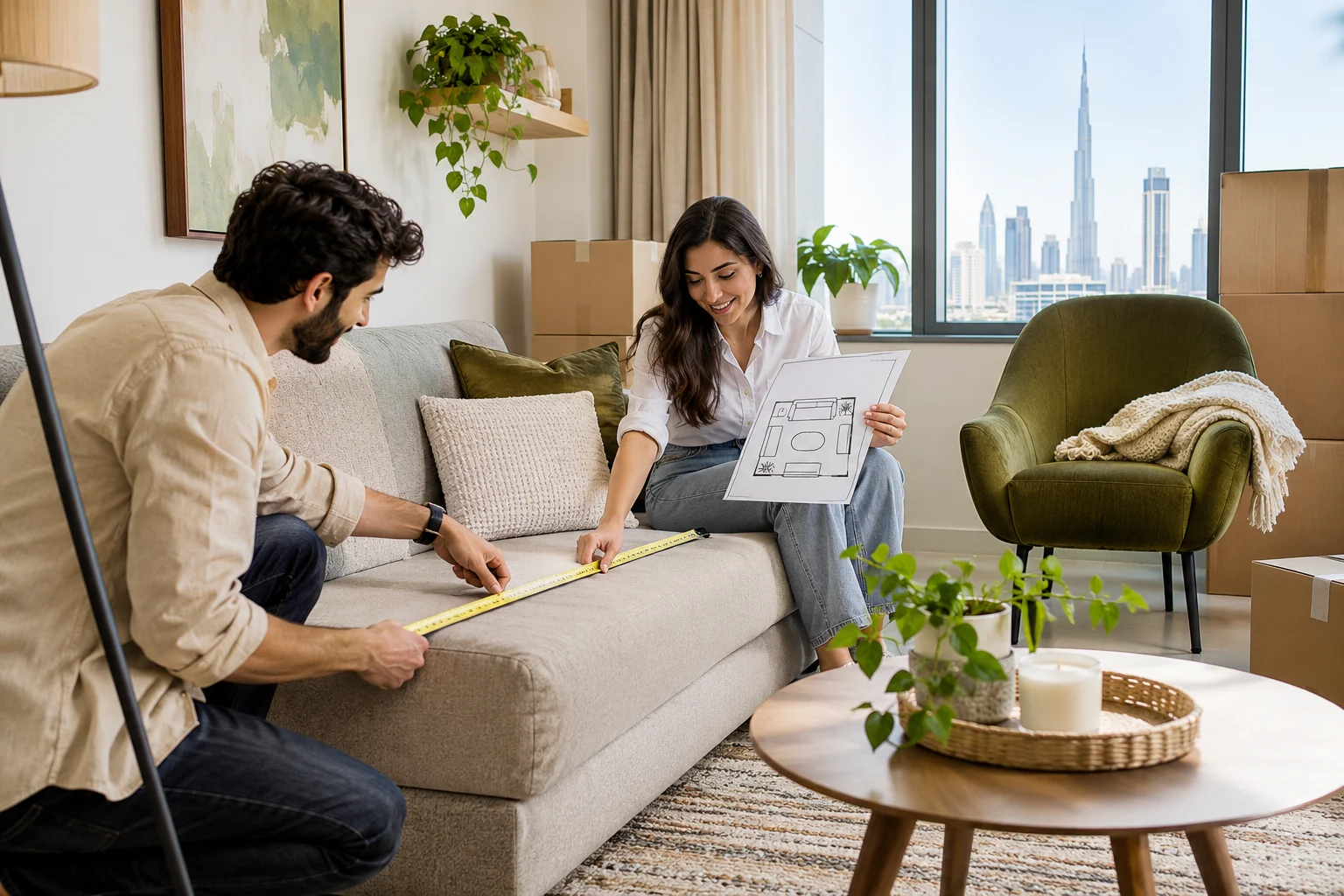
Large furniture can change the useful light reaching the room and the access to window controls. Mark the bed, wardrobe, desk and sofa on a simple plan. Check whether curtains can move freely and doors can open. A cabinet that fits a wall dimension may still make a window difficult to reach.
Use actual furniture sizes and preserve normal access. Do not place items where they obstruct ventilation, equipment or safe use of the room. If a piece would need fixing, obtain permission and use a competent installer as required. A good light and privacy plan should remain workable after the apartment is fully furnished, rather than depending on the room staying empty.
Ask about technical questions through the right person
If you notice a damaged fitting, a window that does not close normally or another visible problem, record the observation and ask for the responsible contact. Do not diagnose glazing performance, promise cooling savings or estimate a technical result from a short visit. Appearance alone cannot establish those things.
For any proposed technical change, request suitable assessment and clarify the relevant permission. Do not force handles, remove seals or alter the property yourself. Keep the issue separate from your ordinary preference for a brighter or more private room. One is a maintenance or technical question; the other is a personal fit question that you can compare across available homes.
Keep future changes in perspective
The outlook around a home can change over time. A current empty plot or open view is not by itself a promise of what will happen later. Ask for reliable information when a known nearby project matters to your choice, and distinguish confirmed facts from speculation. Do not invent dates or assurances during your own comparison.
Base the decision on what you can observe and verify, with uncertainty acknowledged. If an uninterrupted view is essential, explain that clearly and seek appropriate information before committing. Avoid making a major choice from a casual statement that an area “will always stay the same”. A thoughtful decision includes the limits of the information available today.
Write a room-by-room comparison
Give the bedroom, living area and work position separate lines on your notes. Record the time, window position, supplied coverings and the sightline question you checked. Add one practical benefit and one compromise for each room. This makes two homes easier to compare without relying on a single overall impression.
Review the notes with the people who will live there. Choose which points are essential and which are flexible. If one major issue remains unresolved, ask a focused follow-up question or compare another unit. A clear record helps you choose a home for daily comfort while keeping personal preferences, observations and unconfirmed changes in their proper place.
Walk through one ordinary day
Use an ordinary day as your final test of natural light and privacy in dubai apartments. Start with the first task after waking and follow the route through the home. Think about who else is present, what they are doing and which spaces you share. A layout that works for one person standing still may feel different when two people need the same doorway or surface. Small repeated inconveniences deserve attention because you will meet them every day.
Imagine one apartment has a dramatic living-room view but a bedroom that needs its curtains closed for your comfort. Another has a less open outlook yet a work corner with useful gentle light and a bedroom arrangement you prefer. Compare the rooms you will use most and the adjustments you can confirm, rather than deciding from the most attractive photograph.
After the exercise, write three observations and one unresolved question. Keep the language concrete: name the room, the task and the difficulty. If a change seems easy, identify who must approve it and what information is still missing. Avoid treating an imagined improvement as an existing feature. The home you are deciding on should be judged from its present condition and any clearly agreed arrangements, with proposed changes considered separately.
Use a two-stage check instead of rushing
During the first visit, check whether the basic arrangement supports your needs. You do not have to settle every detail in the first few minutes. Note any issue that would prevent the home from working for you, then list the smaller questions. For natural light and privacy in dubai apartments, make a distinction between what you can observe yourself and what needs confirmation from an owner, building contact or service provider.
If the home remains a serious option, use the second stage to resolve those named questions. This may be a permitted repeat visit, a written reply or a supplier’s verified specification. Keep the response beside the original note. If someone suggests a repair or alteration, ask what is proposed, when it would happen and how you can check the result. Do not turn an uncertain answer into a tick simply to finish the list. A clear “not yet confirmed” is useful information when you compare homes.
Prepare a short brief before your viewing
Start by writing what you need from natural light and privacy in dubai apartments. Put your three most important needs at the top of a page. Keep a second list for things that would be pleasant but are flexible. This stops an attractive detail from hiding a daily problem. Bring the people who will use the space into the discussion where possible. Each person may notice a different part of the routine, and a shared decision is easier when those needs are clear early.
Use a small notebook or one phone note for each property. Record the actual unit, the date and the questions still open. Do not mix notes from two apartments with similar layouts. Ask permission before taking photos, opening cupboards or operating fittings. Respect occupants and avoid photographing personal belongings. A viewing is a chance to understand the home through ordinary use; it is not permission to enter restricted spaces, move heavy objects or carry out technical work.
Turn your notes into a fair comparison
Compare homes using the same questions. A simple page with “works”, “needs checking” and “does not fit” can be more useful than a complicated score. Write a reason beside each answer. For natural light and privacy in dubai apartments, a vague “good” tells you less than a clear note about the task you tried. Put unknown details in their own column. Do not give an unconfirmed promise the same weight as something you observed or received in writing.
Imagine one apartment has a dramatic living-room view but a bedroom that needs its curtains closed for your comfort. Another has a less open outlook yet a work corner with useful gentle light and a bedroom arrangement you prefer. Compare the rooms you will use most and the adjustments you can confirm, rather than deciding from the most attractive photograph. Keep the trade-off visible beside the benefits. If you can improve a problem with furniture or a different routine, check the cost and practicality before assuming it is solved. Any physical change to the property needs the relevant permission. For technical issues, ask an appropriately qualified provider to assess the proposal. The aim is a home that supports your life, with compromises you understand and can reasonably manage.
Ask for clear next steps before committing
Send the agent a short list of your remaining questions in one message. Name the room or feature, explain what you need to know and ask who can confirm it. If work is proposed, clarify its scope and when you can check the result. Keep the reply with your viewing record. Avoid relying on a general “everything will be ready” when one specific issue matters to your choice.
A practical viewing guide does not decide contract terms, payment responsibility or legal rights. Read the documents that apply to your transaction and seek suitable professional advice when needed. Do not pay for an extra service simply because a suggestion sounds convenient during a busy visit. Ask what is included, who will do it, what approval is needed and how the cost is recorded. A clear next step gives you a stronger basis for deciding than pressure to answer immediately.
Find a home that fits the way you live
Browse Dubai properties for rent with a brief that explains your real routine. Explain which rooms need daylight, when you use screens and which privacy concerns matter to your household. Add your preferred areas, budget range and likely moving window. The clearer the needs, the easier it is to discuss whether an available property deserves a viewing. Listings are a starting point; availability and details still need confirmation for the actual unit.
Explore apartment listings and the property journal for related planning guides. To ask about a property or arrange a permitted viewing, contact Friends Guide Real Estate. Take your notes to the appointment and leave with a decision, a specific follow-up question or a clearer brief for the next home. That makes each viewing useful even when the apartment is not the right match.
Dubai Property Viewing Checklist
Continue your research with current Friends Guide Real Estate listings and related property pages: Properties for sale in Dubai · Properties for rent in Dubai · Dubai real estate team.