Start with the order of the day
A move can feel like ten small jobs happening at once. The driver wants the entrance location. A delivery team needs a lift. Someone cannot find the keys. Meanwhile, the family needs drinking water and a place to sit. A clear order makes the day calmer. Finish access arrangements first, record the empty home next, and let the heavy deliveries begin after that. Leave the unpacking of decorative items until the basic rooms work.
This Dubai apartment move-in day checklist is for the practical handover and moving day. It does not replace your tenancy agreement or the building’s instructions. If something affects your contract, deposit or responsibility for a repair, ask for a clear written answer from the appropriate person. Friends Guide Real Estate can help you discuss viewing and handover questions while you compare homes.
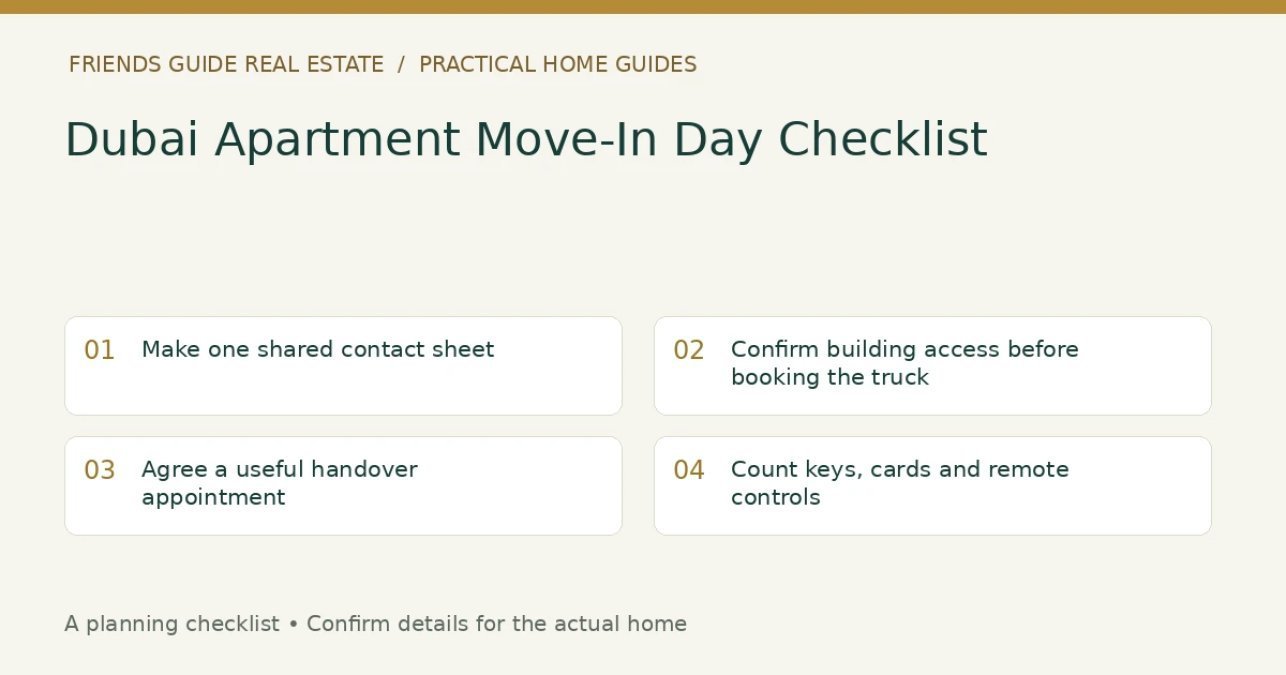
Make one shared contact sheet
Write the building name, full address, apartment number, entrance description and parking instructions on one page. Add the agreed handover time and the moving company’s arrival window. Keep the names and business numbers of the agent, building contact and moving supervisor together. Share only the details each person needs. Movers normally need the delivery route and access contact; they do not need a copy of your whole rental file.
Choose one adult to coordinate calls on moving day. A second person can check the home and direct furniture. When everyone gives different instructions, small delays become harder to solve. If you are moving alone, tell the moving supervisor which task you must finish before unloading starts. Keep a printed copy of the contact sheet in case your phone battery runs low.
Confirm building access before booking the truck
Ask the building team whether a moving booking, access approval or particular delivery window is needed. Confirm where the truck can stop, which entrance movers should use, and whether a service lift is available. A normal visitor parking place may not be suitable for a large truck. A passenger entrance may also have steps or sharp corners that make a trolley difficult to use.
Do not treat another resident’s experience as your final instruction. Arrangements can differ by building, delivery size and date. Ask what information the building wants and when it must be provided. If your move includes a large sofa or several appliances, describe them early. Record the agreed route so the moving team does not arrive expecting a different entrance or an unrestricted lift.
Agree a useful handover appointment
A handover should give you enough time to identify the unit, receive access items and record visible condition. Avoid arranging it for the exact minute the truck arrives. A short gap allows you to discover a missing card or a locked room without a queue of boxes waiting downstairs. Ask who is attending and who can answer questions about outstanding work.
Bring the agreed handover record and your own list of items to check. If repairs were promised during the viewing, take those written messages with you. Ask whether each item is complete, still pending or awaiting another visit. Record an expected next step for unfinished work. A cheerful verbal promise is easier to misunderstand than a short note naming the item, the person responsible and the agreed follow-up.
Count keys, cards and remote controls
Separate access items by purpose. You may receive apartment keys, building cards, parking remotes, mailbox keys or other items depending on the home. Write down the number received for each. Check that a key is for the right lock and that a card works at the entrance it is supposed to open. Ask before testing equipment or entering areas that require permission.
Keep one access set with the person coordinating the move. Do not leave every key on a kitchen counter while the apartment door is closing behind you. Store spare items safely and label them without adding unnecessary personal information. If an access item does not work, report it during handover and ask for a replacement process. Never assume a remote or card will activate itself later without confirmation.
Photograph the empty apartment carefully
Take a wide photo of each room before boxes cover the walls and floors. Then take closer pictures of any marks, chipped surfaces, cracked tiles or damaged fittings you can see. Include enough surrounding detail to identify the location. A close picture of a scratch is less useful if nobody can tell which door it belongs to. Use clear filenames or a simple room-by-room folder.
These photos help create a condition record; they do not decide who is legally responsible for an issue. Share relevant findings through the agreed reporting channel and keep the response. Do not photograph neighbours, private documents or security controls. If something is difficult to capture, write a short description with its location. For example, “small chip on the lower edge of the kitchen cabinet beside the sink” is clear and easy to revisit.
Check everyday functions without doing repairs
Walk through the home with normal use in mind. Can the main door close properly? Do interior doors open without striking furniture positions? Is there an obvious water leak or unusual smell? Are windows and balcony doors operating as expected? Only perform ordinary, safe checks that the handover contact permits. Do not remove electrical covers, reach into equipment or try to repair a fault yourself.
If you see exposed wiring, active leakage near electrical equipment or another immediate hazard, keep people away and contact the responsible building or maintenance team. Describe what you observed instead of guessing at the cause. A useful report includes the room, the visible problem and when you noticed it. Ask whether a room or appliance should remain unused until a qualified person checks it.
Put utilities and connectivity on your timeline
Confirm the arrangements for electricity, water, cooling and internet that apply to your particular home. Ask which services require your own account, which are handled through the building, and what evidence of readiness you can check before moving. Avoid relying on a light that worked during one viewing as proof that everything will be ready for your first night.
Keep account references in a private folder rather than on the movers’ contact sheet. If a service is not ready, decide what that means for the move. It may affect refrigeration, safe lighting, cooling or your ability to work. Ask the provider or responsible contact for the next step. Make a practical backup plan for essential needs instead of assuming a pending activation will finish at a particular hour.
Measure the delivery route as well as the rooms
A bed can fit inside a bedroom and still fail to reach it. Check the width of doors, narrow corridors, lift openings and tight turns. Ask the moving company how it wants measurements and whether large items need to be taken apart. Include the size of packed or protected items, because blankets and packaging add bulk. A photograph of a corner can help the team understand a difficult turn.
Do not let a delivery crew force furniture through an opening or remove building fittings without permission. If an item cannot pass safely, pause and agree an alternative. This might mean a different delivery method, assembly inside the apartment or choosing a different item. Confirm any extra work and cost before it starts. Planning the route is much easier while the truck is still being booked.
Label boxes by destination and priority
Use simple labels such as “bedroom one”, “kitchen first” and “bathroom essentials”. Put the label on more than one side so it remains visible when boxes are stacked. Mark fragile items clearly and tell the team which boxes must stay upright. A room name is more useful than the name of the person who packed it if the movers do not know your family.
Make a small floor plan with the main furniture positions. It need not be a professional drawing. Show which wall takes the bed, where the desk belongs and which walkways must remain clear. Put this near the entrance and keep another copy with you. Moving a large wardrobe once is easier than unpacking around it and then discovering that it blocks the bedroom door.
Keep the entrance and escape routes clear
Ask movers to bring items into the assigned rooms rather than creating one high pile at the entrance. Keep corridors, doors and access routes open. Do not store boxes in communal spaces unless the building has specifically allowed it as part of the move. Shared areas must remain usable for other people, including residents who need extra space to pass.
Inside the home, keep sharp tools, loose cables and torn packaging away from walking routes. Place heavy boxes low and avoid unstable stacks. If you have children or pets, arrange a calm supervised area away from moving trolleys and open doors. The aim is a controlled flow of items. It is better to pause unloading briefly than to build a pile that makes every later trip harder.
Prepare one first-night bag per person
Pack toiletries, a change of clothes, chargers, any usual personal essentials and bedding where you can reach them. Keep important documents and valuables with you. Add drinking water, simple food and a few basic cleaning items. You should not need to open twelve kitchen boxes to find a cup after a long day. Use a separate bag for any essential items that require careful storage.
Prepare the sleeping area and one working bathroom before you tackle decorative boxes. If children are moving with you, keep a familiar item easy to find. If you must work the next morning, keep your laptop, headset and work clothes together. A first-night bag is not an admission that the move will go badly. It is a small plan that gives you room to finish unpacking at a sensible pace.
Separate cleaning from furniture placement
Ask what cleaning has been completed before handover and inspect the result. An empty home is easier to clean than one filled with cartons. If you need an additional clean, arrange its timing before the furniture arrives where possible. Tell the cleaner which areas must remain dry or unused while work is being completed. Avoid mixing several teams in one narrow room.
Check surfaces using suitable products and follow the product instructions. Do not combine cleaning chemicals. If a stain or smell suggests an underlying maintenance problem, record it and ask the responsible person to assess it instead of hiding it with a stronger product. Keep the difference between cleaning and repair clear. Cleaning can remove ordinary dirt, while a leak, damaged fitting or recurring damp patch may require a separate inspection.
Give every delivery a clear receiving process
Ask each delivery team to call the coordinator before arrival. Confirm the entrance again, particularly if the building has several towers or similar names nearby. Have the order reference ready, but do not share unnecessary account details. Check the number of packages received and note visible damage before the team leaves, following the seller’s delivery process.
For assembly or installation, confirm what the booked service includes. Delivery alone may not include fitting an appliance, hanging an item or disposing of packaging. Use qualified providers for work that requires them and obtain any relevant building permission. If a worker offers an unplanned extra service, pause to clarify its scope, price and approval. Busy moving days are a poor time to agree unclear work under pressure.
Create a short snag and follow-up list
Keep one list rather than scattering problems across several chats. Give each item a room, a brief description, a photo reference and a date. Add the contact who received it and the next agreed action. Separate urgent safety concerns from minor appearance issues so the recipient can understand the priorities. Avoid exaggeration; precise descriptions are easier to act on.
After a repair visit, check the result using normal safe use. Record whether the issue appears resolved or needs another review. Keep the original photos and messages together with the handover record. This organised trail helps everyone remember what was found and what happened next. It also stops a small unfinished task from disappearing beneath the noise of unpacking, deliveries and a new daily routine.
Try a realistic moving-day plan
Imagine your handover is at ten in the morning and your movers are booked for early afternoon. Use the first period to receive keys, walk through the empty rooms and send any condition notes. Set aside the essentials bag and check the agreed unloading route. When the movers arrive, show the room labels and furniture plan before the first large item leaves the truck.
Later, check the main furniture positions before opening every carton. Prepare the beds, bathroom and a simple eating space. Leave time for removing loose packaging and keeping paths clear. This is an example of order, not a promise that every move fits the same clock. Build your own plan around the approved access window, travel time, service readiness and the people available to help.
Plan for delays without losing control
Give the day a few simple decision points. If the handover has not finished, tell the moving supervisor before the truck sets out. If access is delayed, keep the team in contact with the coordinator rather than sending several people to argue at reception. If an essential service is unavailable, decide whether you can safely stay that night or need to use another arrangement. Make decisions from confirmed information.
Keep a small list of flexible tasks. You may be able to unpack clothes while waiting for a desk delivery, but you should not block a hallway with cartons before a large bed arrives. Avoid paying for unplanned extras until you understand why they are needed and what they include. Ask for the updated delivery or work details in writing. A delay is easier to manage when the next action is clear.
Finish with a room-by-room check
Before the moving team leaves, walk through the apartment with the supervisor. Check that the agreed items have arrived, obvious delivery damage has been noted and furniture is in the intended room. Count any boxes you recorded at collection. Follow the moving company’s agreed process for missing or damaged items. Do not sign a statement you have not had the chance to read.
Then make your own short closing check. Keep access items together, remove trip hazards, secure windows and doors using their normal operation, and check that personal essentials are reachable. Save delivery receipts and handover notes in your private folder. Put tomorrow’s three most useful tasks on a list. Ending the day with a clear bedroom, a working bathroom and an organised follow-up plan is a stronger result than opening every box while exhausted.
Check your plan the evening before
Read the address, contact numbers and arrival windows one last time. Charge your phone and power bank. Put keys, personal documents and the first-night bags somewhere you will carry yourself. Confirm that the moving supervisor has the right building and apartment number. Check whether weather, road conditions or a changed delivery window means the order of the day needs adjusting.
Send one short confirmation to the people involved rather than many unclear messages. It can say who is arriving, when, which entrance they will use and who will meet them. If a key task is still uncertain, name it directly. “Access approval is still awaiting confirmation” is more useful than “all should be fine”. Clear facts allow you to adjust before the truck is outside.
Choose the next home with moving day in mind
When you browse Dubai properties for rent, consider the journey into the apartment as well as the rooms. Ask about delivery access during viewings. Compare doorway widths, lift arrangements, storage and the place where everyday items will live. A well-planned move starts with a home that fits your household and belongings.
You can explore apartment listings and use the property journal for related planning guides. For availability or viewing support, contact Friends Guide Real Estate with your preferred area, budget range and moving window. Ask the team to help you clarify the property details; confirm building-specific arrangements with the responsible building contact.
Dubai Real Estate Guide
Continue your research with current Friends Guide Real Estate listings and related property pages: Properties for sale in Dubai · Properties for rent in Dubai · Dubai real estate team.