
Write down your real weekly pattern
A shift worker’s home must work at times that ordinary viewing checklists can miss. You may sleep in the afternoon, leave before dawn or share a home with someone who follows a different timetable. Begin with a sample week showing work, travel, sleep, meals and errands. Use the pattern you expect rather than the most convenient day.
Mark the periods you most need to protect and explain them to the agent in practical terms. “I need to sleep in this room during daylight” gives a clearer brief than “I want a quiet flat”. If shifts rotate, include more than one pattern. The aim is a home that can support your changing routine without depending on everyone else following the same schedule.
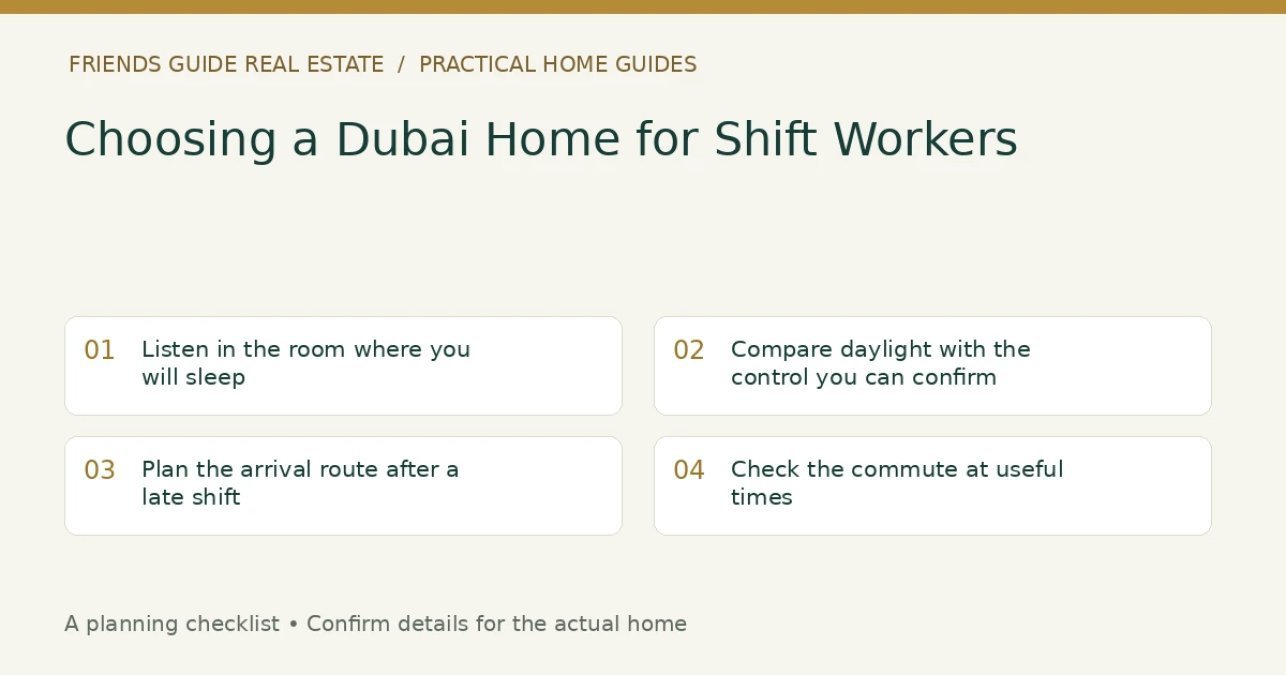
Listen in the room where you will sleep
Check the actual bedroom rather than judging the apartment from its living room. Stand near the likely bed position and pause conversation. Notice traffic, corridor activity and sounds from inside the home. Ask permission to compare normal window and door positions. Describe what you hear instead of diagnosing the building.
If a daytime sleeping period matters, request an allowed visit at a relevant time. Access depends on permission and availability. One quiet visit cannot guarantee future conditions, so record the observation and what remains uncertain. Consider the bed’s relationship to the main entrance and kitchen as well as outside sound. Household movement can matter as much as the surrounding road.
Compare daylight with the control you can confirm
Look at window size, orientation and the existing curtains or blinds. A bright bedroom may suit one household while creating a planning question for someone sleeping after a night shift. Check what is actually supplied and how the fittings operate using ordinary permitted use. Do not assume a staged curtain is included.
If you would need different window coverings, confirm permission, measurements and installation before relying on the change. Ask a supplier about the exact product rather than accepting a guarantee from its name. Keep ventilation and normal access clear. The choice is about the room and the adjustments you can reasonably verify, not a promise that every bedroom can be made identical.
Plan the arrival route after a late shift
Trace the journey from your usual arrival point to the apartment. If you drive, clarify the assigned parking arrangement and normal pedestrian route. If you use other transport, check the practical arrival point and building entrance. A short distance on a map may include a longer indoor walk or an inconvenient transfer.
Ask the responsible building contact how normal resident access works at the hours you expect. Confirm cards, keys and any relevant procedure at handover. Do not request or share security details beyond what you need as a resident. Compare the whole route with your own mobility and luggage needs, and avoid assuming that access arrangements in another building apply here.
Check the commute at useful times
Your journey may differ from the daytime route shown during a viewing. Identify the actual work location and expected travel periods. Use current transport or route information from the appropriate provider when planning, and allow for changes. Do not treat a listing’s approximate travel claim as a guarantee for your shift.
If the commute is critical, test it where practical and safe before making your decision. Include parking, walking and waiting rather than comparing only the fastest driving segment. Keep the costs and uncertainties visible on your property notes. A home that looks convenient on a map may still create a difficult routine once the entire door-to-door journey is considered.
Separate the sleeping area from household activity
Draw where people prepare meals, watch television, study and leave for work. A bedroom directly beside the kitchen may be less suitable for your routine even if the street is quiet. Consider whether another room arrangement or a different unit provides better separation. Room count alone does not answer how the home works.
Discuss the pattern with everyone who will live there. You may agree a quieter preparation area, a different television position or a practical door routine. Do not expect an unrealistic level of silence every day. The arrangement should respect both the person sleeping and the people carrying on normal life, with compromises that everyone understands before moving.
Make meals and food storage part of the plan
Think about arriving hungry when others are asleep. Check where you can prepare a simple meal without repeatedly crossing the sleeping area. Include refrigeration, accessible cupboards and the place where you will eat. If you prepare several meals at once, compare the usable kitchen space with your actual containers and equipment.
Confirm which appliances are included and ask about any uncertain equipment or service arrangements. Use normal safe checks and leave technical work to qualified providers. A practical meal routine can reduce disruption, but do not assume you can add or relocate appliances without permission. Choose a kitchen arrangement that fits the household rather than relying on everyone cooking at the same time.
Consider laundry and routine chores
Laundry, cleaning and deliveries still need to happen even when your sleep period is unusual. Check where equipment and baskets will go and which chores may create sound near the bedroom. Ask the building contact about any relevant use arrangements for shared facilities. Keep confirmed instructions separate from assumptions.
Plan chores with the household and follow the property and equipment instructions. Avoid storing items in shared corridors or blocking access to fittings. If a machine creates a concerning sound or visible fault, report it through the agreed channel rather than trying to repair it. A workable chore routine should support rest without turning ordinary household tasks into a recurring disagreement.
Ask about shared facilities you expect to use
A gym, pool or other shared facility may look useful in a listing, but you need to know whether its actual operating arrangements match your free time. Ask the responsible contact for current information and clarify any access conditions relevant to you. Do not assume a facility is available whenever a resident happens to be awake.
Include the journey to the facility in your planning. If its schedule does not match your shifts, decide whether it should influence the property choice at all. Avoid paying for a benefit you are unlikely to use without understanding the trade-off. Facilities can add value to daily life, but only when their confirmed arrangements fit the person using them.
Plan parcels and necessary appointments
Consider when you can receive deliveries and attend service appointments without repeatedly disturbing sleep. Ask about the normal building process and what providers require. Do not assume reception will accept every parcel or that another resident can provide access. Confirm arrangements with the responsible people.
Keep personal contact and access details private and share only what a provider needs. If you expect an appointment after a shift, allow enough time for travel and rest instead of planning an exact connection with no room for delay. A home that supports a simple delivery and appointment routine can be more comfortable to manage than one chosen solely for the size of its rooms.
Avoid deciding from labels alone
Terms such as “peaceful”, “central” or “family community” do not establish how a particular apartment will work for a shift worker. Compare the unit’s room positions, outlook and access route. Two homes within the same building may differ in ways that matter to your sleeping period or journey.
Keep notes on the specific conditions you observed. If a major question remains unanswered, request a permitted follow-up or compare another property. Do not make assumptions about neighbours or seek private details about their lives. Your decision should be based on the home, the routine you have described and the information you can reasonably confirm.
Build a flexible first-week plan
Moving itself can disrupt a carefully planned routine. Keep bedding, clothes and personal essentials accessible and prepare the sleeping area early. Arrange major deliveries around the building’s approved access window and your availability. Confirm service readiness rather than expecting every activation to finish just before you return from work.
After moving, review which parts of the routine need adjustment. Report property issues through the agreed channel and obtain permission for changes. If shifts rotate, keep a simple shared household calendar so people can plan ordinary activity. A home cannot remove every uncertainty, but a clear first-week plan helps you settle without discovering that all the essential tasks collide with your sleeping time.
Walk through one ordinary day
Use an ordinary day as your final test of choosing a dubai home for shift workers. Start with the first task after waking and follow the route through the home. Think about who else is present, what they are doing and which spaces you share. A layout that works for one person standing still may feel different when two people need the same doorway or surface. Small repeated inconveniences deserve attention because you will meet them every day.
Imagine one home offers a shorter advertised journey but places the bedroom beside the shared living area. Another requires a slightly different route yet has a bedroom that can be separated from daytime activity. Compare the actual journey and sleeping arrangements, including days when shifts rotate. The better match depends on your confirmed priorities and the compromises your household can manage.
After the exercise, write three observations and one unresolved question. Keep the language concrete: name the room, the task and the difficulty. If a change seems easy, identify who must approve it and what information is still missing. Avoid treating an imagined improvement as an existing feature. The home you are deciding on should be judged from its present condition and any clearly agreed arrangements, with proposed changes considered separately.
Use a two-stage check instead of rushing
During the first visit, check whether the basic arrangement supports your needs. You do not have to settle every detail in the first few minutes. Note any issue that would prevent the home from working for you, then list the smaller questions. For choosing a dubai home for shift workers, make a distinction between what you can observe yourself and what needs confirmation from an owner, building contact or service provider.
If the home remains a serious option, use the second stage to resolve those named questions. This may be a permitted repeat visit, a written reply or a supplier’s verified specification. Keep the response beside the original note. If someone suggests a repair or alteration, ask what is proposed, when it would happen and how you can check the result. Do not turn an uncertain answer into a tick simply to finish the list. A clear “not yet confirmed” is useful information when you compare homes.
Prepare a short brief before your viewing
Start by writing what you need from choosing a dubai home for shift workers. Put your three most important needs at the top of a page. Keep a second list for things that would be pleasant but are flexible. This stops an attractive detail from hiding a daily problem. Bring the people who will use the space into the discussion where possible. Each person may notice a different part of the routine, and a shared decision is easier when those needs are clear early.
Use a small notebook or one phone note for each property. Record the actual unit, the date and the questions still open. Do not mix notes from two apartments with similar layouts. Ask permission before taking photos, opening cupboards or operating fittings. Respect occupants and avoid photographing personal belongings. A viewing is a chance to understand the home through ordinary use; it is not permission to enter restricted spaces, move heavy objects or carry out technical work.
Turn your notes into a fair comparison
Compare homes using the same questions. A simple page with “works”, “needs checking” and “does not fit” can be more useful than a complicated score. Write a reason beside each answer. For choosing a dubai home for shift workers, a vague “good” tells you less than a clear note about the task you tried. Put unknown details in their own column. Do not give an unconfirmed promise the same weight as something you observed or received in writing.
Imagine one home offers a shorter advertised journey but places the bedroom beside the shared living area. Another requires a slightly different route yet has a bedroom that can be separated from daytime activity. Compare the actual journey and sleeping arrangements, including days when shifts rotate. The better match depends on your confirmed priorities and the compromises your household can manage. Keep the trade-off visible beside the benefits. If you can improve a problem with furniture or a different routine, check the cost and practicality before assuming it is solved. Any physical change to the property needs the relevant permission. For technical issues, ask an appropriately qualified provider to assess the proposal. The aim is a home that supports your life, with compromises you understand and can reasonably manage.
Ask for clear next steps before committing
Send the agent a short list of your remaining questions in one message. Name the room or feature, explain what you need to know and ask who can confirm it. If work is proposed, clarify its scope and when you can check the result. Keep the reply with your viewing record. Avoid relying on a general “everything will be ready” when one specific issue matters to your choice.
A practical viewing guide does not decide contract terms, payment responsibility or legal rights. Read the documents that apply to your transaction and seek suitable professional advice when needed. Do not pay for an extra service simply because a suggestion sounds convenient during a busy visit. Ask what is included, who will do it, what approval is needed and how the cost is recorded. A clear next step gives you a stronger basis for deciding than pressure to answer immediately.
Find a home that fits the way you live
Browse Dubai properties for rent with a brief that explains your real routine. Explain your usual and rotating shifts, important sleeping periods and how you travel to work. Add your preferred areas, budget range and likely moving window. The clearer the needs, the easier it is to discuss whether an available property deserves a viewing. Listings are a starting point; availability and details still need confirmation for the actual unit.
Explore apartment listings and the property journal for related planning guides. To ask about a property or arrange a permitted viewing, contact Friends Guide Real Estate. Take your notes to the appointment and leave with a decision, a specific follow-up question or a clearer brief for the next home. That makes each viewing useful even when the apartment is not the right match.
Dubai Real Estate Guide
Continue your research with current Friends Guide Real Estate listings and related property pages: Properties for sale in Dubai · Properties for rent in Dubai · Dubai real estate team.